Goose the Blog 2.0

"Oh, ha! Sarcasm: The last refuge of sons of bitches!"

5/07/2009

Homo floresiensis back in the news

by John at 5/07/2009 10:03:00 AM

Hobbits 'are a separate species'

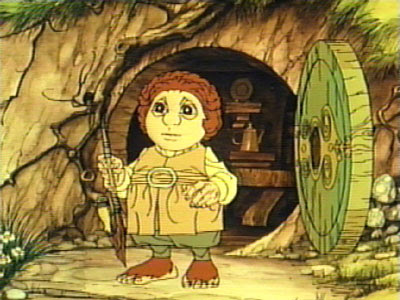
Two new papers in Nature argue that the skeletons of diminutive humanoids found on the Indonesian island Flores in fact belong to members of a different species than Homo sapiens, and are not diseased individuals as some have hypothesized. The papers do not address the issue of whether they made cozy homes under the ground, or whether their unusually large feet were, in fact, hairy.

Interesting news, but mostly I just wanted to use this picture.

Labels: ,

3/04/2008

hey, I can see my house from here!

by John at 3/04/2008 08:15:00 AM

It's right over there.

Labels:

2/23/2008

not again!

by John at 2/23/2008 09:31:00 PM

Wendy sends this along:

A pretend zebra escaped from it's pen at the Ueno Park Zoo in Tokyo this week. It injured at least two zoo workers before being subdued.

Labels: , ,

2/22/2008

just when I thought I was finally getting my shit together...

by John at 2/22/2008 08:30:00 PM

Hope dims that Earth will survive Sun's death.

Labels: ,

12/20/2007

sustainability

by John at 12/20/2007 07:53:00 AM

As you no doubt have noticed, I haven't blogged anything lately but kid pics.

However, this morning I read a blog post over on Pandagon that sent me to an article by Michael Pollan (author of Omnivore's Dilemma, which you should read if you haven't yet) in the NYT Magazine.

Pollan makes a good case that: 1) the word sustainability doesn't really mean anything anymore, because it means whatever we want it to mean* 2) industrial pig farming is responsible for new strains of MRSA circulating in the public and 3) industrial almond growing is the ultimate cause of Colony Collapse Disorder in honeybees.

Amanda Marcotte at Pandagon brings up an interesting point related to this. These systems are inherently unstable and unsustainable, and they are the logical result of capitalism. Is capitalism (at least the way we practice it, if not by its very nature) the enemy of sustainability? I've long that this may be the case, and I suspect I'm not alone in this. However, any discussion of alternate economic systems is forbidden, and generally degrades into accusations of communism or socialism. As if humans had already tried and failed at every other possible way to exchange goods and services, as if modern capitalism was our last and only hope.

Anyway, somethings to think about as you celebrate the Christmas and welcome 2008. Happy New Year, everyone!

- - - - -

* At my company back in 1999 or so, sustainability became one of our goals. What it meant, however, depended on who was talking (or who was being talked to). To us researchers, it meant a decreasing environmental footprint, but to the money guys, it meant continued economic growth, e.g. stock price, revenue, and profits.

Labels: ,

7/18/2007

not promising news

by John at 7/18/2007 12:59:00 PM

I few days ago, I read an article (pdf, 9.5 Mb) transcribed from a speech by Nate Lewis, a Caltech chemistry professor, in Caltech's quarterly periodical, Engineering and Science. Lewis used to teach freshman chemistry and was always pretty popular because, I guess, he was a funny guy. I never took his class.

Anyway, Lewis gave a talk about the future of energy use in the world, especially concerning ways to stabilize the level of CO2 in the atmosphere. After analysis for population growth, GDP growth, efficiency improvements (which includes conservation, I think), and the carbon-to-energy ratios of fuels used, he calculates that to stabilize atmospheric CO2 to 550 ppmv* (parts per million by volume - for the last 670,000 years, CO2 has been 200-300 ppmv - it is now 380 ppmv) we would have to have online, by 2050, enough carbon-free energy generation capacity to equal the total energy generation capacity we have today. That is, we would need about 10 terawatts of carbon-free power, if we start now. If we don't start for 30 years, we'll need 15-20 terawatts of carbon-free power by 2050.

Here is where it gets "not promising."
  • To get that much carbon-free energy, we would have to build a new 1 gigawatt nuclear reactor every other day for the next 40 years. Because nuclear plants have a 50 year lifespan, we will have to go on building them forever. Also notable: There is not enough uranium fuel to power all those reactors, so we will have to use plutonium, which exacerbates the threat of nuclear weapon proliferation.
  • We don't have time to wait until nuclear fusion is demonstrated (there has been a 35 year horizon for this technology for the last 50 years).
  • Carbon sequestration pumps the CO2 underground where we hope it stays, but, while we may have the capacity to store all the CO2 generated, the technology is not proven, and if it works, if uniformly distributed, the CO2 generated by the United States and pumped underground would raise the elevation of lower 48 states by 5 centimeters.
  • There are about 0.9 terawatts of economically accessible hydroelectric power, but we are already using 0.6 terawatts of it.
  • Geothermal power has about 11 terawatts of power spread out over all the landmass of the globe, but capturing it is far less than 100% efficient.
  • Windpower can generate about 2 to 4 terawatts over the entire surface of the Earth.
  • Biomass could make available 20 terawatts of power (if growing and harvesting do not require energy) at a cost of 31% of the total land area of the planet. This isn't in the article, but, for example, using corn to produce ethanol to burn as fuel may actually be energy negative - that is, it takes more energy to make ethanol through fertilizing, harvesting, and manufacturing than you get out of it when it is burned.
  • Solar energy is just about ubiquitous, and plentiful. It would take only six 400km x 400km arrays of modern photovoltaic cells to generate all the power we consume today. That doesn't sound too bad, but my back-of-the-envelope calculation says that one of those 400km x 400km plots is equivalent to about 500 million home roofs. Plus, solar is now 5 to 10 times more expensive than fossil fuels, and you have to be able to store the power generated to use it when it is dark out - one option here is electrolysis of water to form H2, which can be oxidized to form water and generate electricity in fuel cells.
So the viable options are: 1) 10,000 new nuclear power plants, 2) keep on burning fossil fuels but sequester the carbon dioxide, or 3) find a way to make cheap solar power, solve the hydrogen storage and transportation problem, and make fuel cells that work.

And we have to start tomorrow.

-----

* From the article: "Although major uncertainties remain, most climate-change researchers set 550 ppmv as the upper limit of what would lead to about a two degree Centigrade mean global temperature rise. This is projected to have significant, but possibly not catastrophic, impacts on the earth’s climate. For example, the coral reefs would probably all die. But we, as humans, would probably be able to adapt, at some level, to such a change. On the other hand, most people in the modeling effort feel that 750 ppmv or higher would be quite serious."

Labels:

7/12/2007

promising news

by John at 7/12/2007 01:25:00 PM


Organic farming could feed the world


A switch to organic farming would not reduce the world's food supply and could also increase food security in developing countries, say the authors of a new study.

...

Ivette Perfecto of the University of Michigan in the US and her colleagues found that, in developed countries, organic systems on average produce 92% of the yield produced by conventional agriculture. In developing countries, however, organic systems produce 80% more than conventional farms.

Perfecto points out that the materials needed for organic farming are more accessible to farmers in poor countries.

Those poor farmers may buy the same seeds as conventional farms use in rich countries, but they cannot afford the fertilisers and pesticides needed for intensive agriculture. However, "organic fertiliser doesn't cost much – they can produce it on their own farms", says Perfecto.

Using data from the UN Food and Agriculture Organization, the team then estimated what would happen if farms worldwide were to switch to organic methods today.

The world currently produces the equivalent of 2786 calories per person per day. The researchers found that under an organic-only regime, farms could produce between 2641 and 4381 calories per person per day.


But how are we ever going to find enough ex-hippies to run all the farms?

Labels:

6/08/2007

I did not know that

by John at 6/08/2007 07:55:00 AM

While Sillett's brother watched in horror below, fearing that Steve had lost his mind, Sillett and his friend Steve Marwood threw themselves into a small tree next to the giant and climbed branch by branch to its top, which is called a "leader." Seventy feet aboveground, the leader swayed under his weight as he stared across the gap between himself and the lower fragile branches of the immense redwood trunk. Struggling to control his fear of heights, he threw his body into space and grabbed the branch like a trapeze, landing safely in the tree. Sillett and Marwood climbed the crown of the immense tree they called "Nameless," entering a dense labyrinth of branches more than 200 feet high holding beds of soil where masses of ferns, lichens and ripe huckleberries grew.

"The top of Nameless had been sheared away in a storm that occurred many centuries earlier, and the tree had reacted by driving a radiance of branches spreading horizontally in all directions away from the broken trunk, like spokes coming from the hub of a wagon wheel. Those branches had sprouted vertical trunks, like spikes on a crown. A forest of small redwoods had sprung out of the top of Nameless -- Nameless Wood." As far as anyone knows, Sillett was the first person ever to visit the upper redwood canopy. It was one of "the last unseen realms on the planet." He has dedicated his life to canopy science, going on to make the first 3-D map of the upper reaches of a virgin redwood grove, where new species, such as earthworms and lichen, are still being found. He also became a master tree climber; never again would he climb a giant without the proper equipment -- it's a miracle he didn't die that day.

The redwood defines "superlative," not only in terms of big, but in terms of complicated. It is "the largest and tallest individual living organism that has appeared in nature since the beginning of life on the planet." The fern gardens in old redwood crowns are second only to Olympic Peninsula rain forests in their density, and scientists estimate the crowns hold so much water they function as airborne aquifers, supporting species such as salamanders and copepod crustaceans, the most abundant animals in oceans. The oldest titans, such as Ilúvatar, in Prairie Creek Redwood State Park, contain some 37,000 cubic feet of wood and are so dense you could "put on a pair of snowshoes and walk around on top and play Frisbee there." Many of the trees, Preston explains, reiterate themselves numerous times in the crown, repeating their own shape in smaller scales of size in the form of a fractal. Ilúvatar has done so six times, creating "Ilúvatars within Ilúvatars, " and is considered one of the most complex living structures ever discovered.


Can you believe it? Better than I even imagined. You can read more about it at Salon, and there's a book, too, that I will probably have to look into.

Labels: ,